15 June 2026 · Maison Zola
How long does a custom pet portrait take? An honest timeline
An honest breakdown of how long a custom pet portrait actually takes, by service type. From three-day digital prints to multi-month hand-painted commissions.
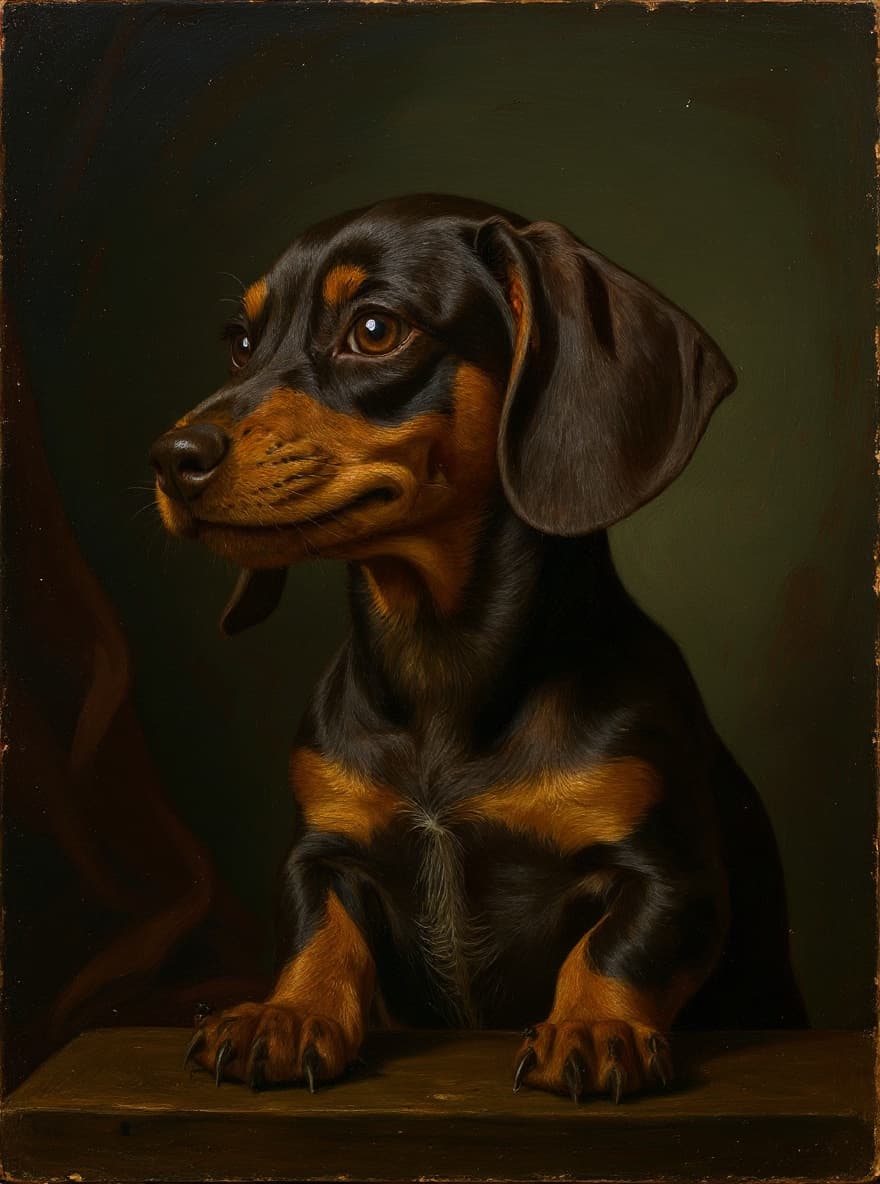
The question that arrives most often, just before payment, is some version of: how long will this take. The honest answer depends on what you are commissioning, from whom, and to what specification. This post is the practical guide we wish more services published clearly. The numbers are derived from our own atelier's process and from a careful reading of the published timelines and the customer-record timelines of the major brands.
A note on terminology before we begin. "Lead time" means the total time from when you place an order to when the finished object arrives at your address. "Production time" means the time from order to dispatch, not counting shipping. The two are not the same, and the difference matters most for international services where shipping can add a week or more.
The short version
If you need a custom dog or cat portrait by a specific date, plan as follows.
- Template-driven digital print: allow at least three weeks from order to arrival.
- Studio-style hand-finished portrait (Renaissance, royal regalia, classical oil): allow at least four weeks.
- Hand-painted oil portrait with a US-based brand: allow at least six weeks.
- Hand-painted oil portrait with an internationally-shipped brand: allow at least eight weeks.
- Independent artist commission: allow whatever the artist quotes, plus a fifty per cent buffer.
These are conservative numbers. They build in revision rounds, shipping variance, and the small daily friction that adds up across any custom commission. The rest of this post explains where the time actually goes.
Where the time goes in a template-driven digital print
Crown & Paw, West & Willow, and most of the other recognisable template brands operate on a production pipeline that has three steps: design, proof, fulfilment.
- Design (one to three days). A studio designer takes your photograph and applies the chosen template treatment. For most brands, this is partly algorithmic and partly human.
- Proof and revisions (one to seven days). The brand sends a digital preview. If you approve it, the work moves to fulfilment. If you request revisions, the cycle extends; each round at the major brands typically takes three to five days.
- Fulfilment and shipping (five to fourteen days). The print is produced (canvas, framed canvas, paper, mug, blanket, depending on what you ordered), packaged, and shipped. Domestic shipping within the US or UK runs three to seven days; international shipping runs longer.
If everything goes smoothly and you approve the first proof, a template-driven order can arrive in ten to fourteen days. With revisions, expect three to four weeks. With holiday-season volume, expect four to six weeks.
Where the time goes in a hand-painted oil portrait
Hand-painted services like Paint Your Life and PortraitFlip operate on a fundamentally different cadence, because the production step is not minutes of designer time but days of an artist's actual painting hours.
- Brief and artist assignment (one to three days). The brand reviews your photographs, confirms the order details, and assigns an artist.
- Initial sketch or proof (three to seven days). The artist produces a digital preview or photograph of an early-stage painting.
- Revisions (one to four weeks). This is where the largest variance arises. A portrait approved on the first proof can be finished and shipped within a few weeks. A portrait requiring multiple revision rounds can extend to two months or more.
- Final painting and drying (one to two weeks). Once the proof is approved, the artist completes the painting and allows it to dry sufficiently for shipping. Oil takes time to skin over even for transit.
- Shipping (five to fourteen days domestic, two to four weeks international). Hand-painted portraits cannot be expedited the way printed products can. The object is fragile and requires careful packaging.
Realistically, a hand-painted oil commission from a US-based brand averages six to eight weeks from order to arrival. An internationally-shipped commission averages eight to twelve weeks.
Where the time goes in a studio-style hand-finished portrait
Studio-style brands (our own atelier among them) sit between the template and hand-painted timelines. The work is hand-finished by a studio team in a specific period or visual register, with a fixed workflow rather than open-brief commissioning.
At our atelier, the timeline runs as follows.
- Photograph review and preview generation (one to two days). We assess the source photograph against our internal threshold, generate the first preview, and send it to you.
- Preview revisions (unlimited, until you approve). Our workflow allows unlimited free revisions to the preview. Most customers approve within two or three rounds; some take longer. There is no charge for additional preview rounds and no time limit on this stage.
- Printing, finishing, and packing (three to five working days). Once you approve the preview, we move to physical production. The portrait is printed on archival material, hand-finished in our atelier in Mont de l'Enclus, and packaged for shipping.
- Shipping (two to seven days within Europe, five to fourteen days international). Standard tracked shipping is included; expedited options exist for time-critical orders.
The total timeline averages three to five weeks for European customers and four to six weeks for international customers, with most of the variance sitting in the preview-revision stage.
What slows orders down across the entire market
A handful of factors recur as the main cause of timeline slippage. Knowing them in advance helps you build a buffer that the published lead times do not always include.
- Poor source photographs. A photograph that does not meet the painter's threshold either requires a re-shoot (which adds whatever time the re-shoot takes) or produces a preview that needs more revision rounds than necessary. The single largest accelerator of any custom portrait commission is a strong source image submitted with the order.
- Multiple subjects. A multi-pet portrait roughly doubles the artist's working time, and the composition decisions require additional preview rounds. Plan an extra one to two weeks for two-subject portraits and longer for three or more.
- Holiday season volume. Late November through mid-December is the busiest period across every brand in the market. Lead times during this window typically extend by fifty to one hundred per cent.
- International shipping unpredictability. Customs delays, especially around the holiday season, are outside the brand's control but inside your overall timeline. We have seen otherwise on-time orders held at customs for a week or more.
- Refund and dispute cycles. If a finished portrait does not meet expectations and you initiate a dispute, the resolution timeline typically extends the project by another two to four weeks. This is one reason we strongly recommend approving the preview before any printing or final painting begins.
What speeds orders up
A small number of practical things reliably accelerate any custom commission.
- Submit a strong source photograph. Soft directional light, near-frontal angle, both eyes visible, mouth closed or slightly open, no top-down phone-camera angles. This single factor affects everything that follows.
- Approve the first preview if it is good enough. Iterating toward a marginal improvement on the preview frequently costs more time than the improvement is worth. The best portraits in our queue are usually the ones where the family said yes early.
- Use a brand whose preview workflow is unlimited and free. This sounds counter-intuitive (unlimited revisions should slow things down) but in practice it tends to speed things up, because the family knows they can revise without penalty and tends to commit faster to a "yes."
- Order in shoulder seasons. January through October is the low-volume window in this market. Lead times are reliably shorter and customer-service responsiveness is reliably higher outside the holiday-buying peak.
- Build in a buffer. A portrait commissioned with three weeks of buffer beyond the published lead time almost never arrives late. A portrait commissioned right at the published lead time often does.
How memorial commissions affect the timeline
Memorial portrait commissions are the category most often associated with timeline pressure, because they arrive at moments when the family does not want delay. The honest guidance here is to start the commission as soon as the family is ready, not when a specific anniversary or service date approaches.
We treat memorial commissions with the same workflow as any other portrait but with additional care at the preview stage. Families commissioning a memorial portrait are often working from a small set of photographs and a heightened emotional context, and the preview process takes longer not because we move slower but because the family needs more time to feel the portrait is right.
This is the principal reason we recommend not anchoring a memorial pet portrait to a specific deadline. The portrait will be the same whenever it is finished. The deadline tends to add pressure that does not improve the result.
A note on rush services
Several brands in the market offer rush or expedited services for an additional fee. The honest view is that the value of these services varies considerably.
For template-driven brands, a rush service typically guarantees production within a stated window (often three to five days) and uses faster shipping. This is reliable when the brand honours it; multiple customer complaints across the major brands suggest that the rush guarantee does not always hold during peak-season volume.
For hand-painted brands, a rush service typically prioritises your commission in the artist's queue. The painting itself still takes the time it takes; the rush fee buys position in line, not faster brushwork. The value depends on how busy the artist's queue is when you order.
For studio-style brands, including our own atelier, rush options exist but we generally recommend submitting a better source photograph and approving the first preview faster as a more reliable acceleration than paying for a queue jump.
A closing note on planning
The shortest accurate answer to the question of how long a custom pet portrait takes is: depends on what you commission, but plan more time than the brand publishes. The published lead times across the market are best-case scenarios, not typical ones. A portrait planned with sensible buffer arrives in time; a portrait planned right at the published lead time may not.
If you are commissioning a portrait against a specific date (a birthday, an anniversary, a gift occasion), our practical advice is to start the commission six weeks in advance of when you need it for any hand-painted work, four weeks in advance for any studio-style work, and three weeks in advance for any template-driven print. Adjust upward during holiday season. Adjust upward again for international shipping.
The custom dog portrait you commission today will outlast the photograph it was made from by decades, in most cases by generations. The extra week or two of planning is small compared to the lifespan of the object.