8 May 2026 · Maison Zola
The best photo for a pet portrait: what to shoot and why
Learn how light, distance, and eye contact make the best photo for a pet portrait. Practical guidance from our Belgian atelier on what to shoot and why.
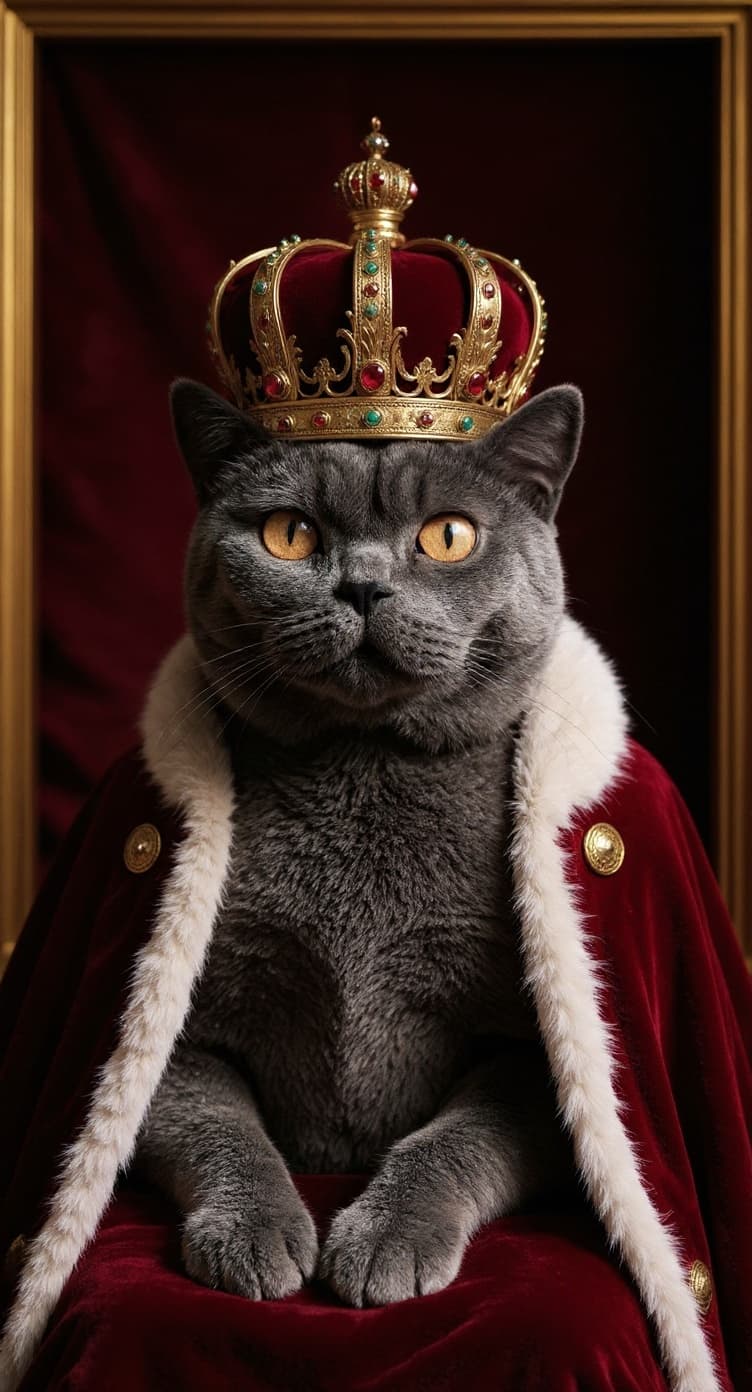
The photograph is the foundation of everything that follows. Before a single brushstroke is laid, before a palette is mixed, the atelier works from what you have sent. A portrait is only as resolved as the image behind it, which is why we return to the question of the source photograph again and again with every commission we receive.
The best photo for a pet portrait is not necessarily the most beautiful one on your phone. It is the one that gives a painter enough information to reconstruct your animal with accuracy and feeling. That distinction shapes every piece of guidance below.
What light does to a portrait
The single most consequential decision you will make is where you position your pet relative to the light source. Flat light, the kind that comes from a phone flash or an overcast midday ceiling, erases the modelling of the face. The muzzle flattens. The brow loses its relief. What remains is a record of colour without form.
The painters of the Flemish cabinet tradition understood that a single directional source, a window to one side, was sufficient to describe a face completely. The same principle applies here. Place your pet near a large window with the light coming in at roughly a forty-five degree angle to the face. One side of the nose should be slightly brighter than the other. The eyes should carry a small, clean catchlight, a pinpoint of reflected window that tells the painter where the light lives.
Avoid direct sunlight falling straight onto the subject. It bleaches the coat, creates harsh shadows under the chin, and closes the pupils to a point too small to read. Bright overcast light, or open shade just inside a sunlit doorway, is the atelier's preference for most breeds.
Distance, angle, and the problem of lens distortion
Smartphones use wide-angle lenses. When you hold a phone close to a dog's face to fill the frame, the lens bends the geometry of the nose forward and compresses the ears backward. The result is a photograph that looks natural on a screen but would produce a portrait with distorted proportions if painted faithfully.
The correction is simple: step back. Use the zoom function, or simply move further away and crop the image afterward. Shooting from a distance of one to two metres and zooming to fill the frame will give you the flatter, more accurate perspective that a portrait painter needs. The nose and the ears will read at something closer to their true relative sizes.
Angle matters almost as much as distance. A photograph taken from above, which is the natural angle when a dog sits at your feet, foreshortens the skull and enlarges the top of the head. Bring the camera to your pet's eye level. Sit on the floor if necessary. The resulting image will have the same compositional gravity as a three-quarter studio portrait, the angle that has anchored formal portraiture since the sixteenth century.
Eye contact and the quality of attention
The eyes are the centre of any portrait. Rembrandt understood this; so did every painter who followed him into the tradition of the single lit face against a dark ground. In a photograph, the eyes need to be sharp, open, and directed at something near the lens.
A pet looking directly into the camera is not always easy to achieve. The atelier has found that a small sound made just above the lens, a quiet tap on the camera body or a whispered word, will often bring the gaze up and hold it for a fraction of a second. That fraction is what you need. Shoot in burst mode if your phone allows it, and review the sequence for the frame where the eyes are fully open and the gaze is level.
Avoid photographs where the eyes are half-closed, caught mid-blink, or looking sharply to one side. A slight turn of the head is fine and often gives the portrait a natural three-quarter quality. A gaze directed entirely away from the lens produces a profile, which is a different compositional problem and one that our custom pet portrait styles handle differently depending on the brief.
The coat and what it requires
Different coats make different demands on the source photograph. A long-haired breed, a Maine Coon or a Golden Retriever, needs a photograph with enough detail in the fur to show the direction of growth and the way light moves through the outer coat. A flat, overexposed image of a pale coat gives the painter nothing to work from.
For dark coats, the challenge is the opposite. A black Labrador photographed in low light becomes a silhouette. The painter needs to see the structure beneath the coat: the line of the jaw, the plane of the brow, the set of the ears. Use slightly more light than feels necessary when photographing a dark-coated animal, and check that the shadow areas still hold detail before you send the image.
Short-coated breeds, French Bulldogs, Whippets, Boxers, reward a photograph that shows the musculature of the face clearly. The folds around the muzzle, the tension of the brow, the soft tissue around the eyes: these are the features that give the portrait its character, and they require good directional light to read.
Common mistakes we see in submitted photographs
Certain problems appear regularly in the photographs that arrive at the atelier. A brief account of the most common ones may save you a second round of shooting.
The background is too busy. A pet photographed against a patterned rug or a cluttered bookshelf makes it difficult to read the silhouette of the head and ears cleanly. A plain wall, a bed with a solid-coloured cover, or an outdoor setting with open sky behind the subject all work well.
The image is too small. A photograph that has been cropped or compressed to a small file size loses the detail the painter needs. Send the largest version of the image your phone produces. Do not resize or compress before sending.
The moment is wrong. A dog mid-yawn, mid-shake, or caught in the act of turning away produces a portrait that records an accident rather than a character. Patience is the most useful tool available to you. Spend ten minutes with your pet in good light before you begin shooting. Let the animal settle. The photograph you want will come.
How we assess a photograph before we begin
When a photograph arrives at the atelier, it passes through an internal review before we accept the commission. We assess sharpness at the eye, the quality and direction of the light, the accuracy of the colour under that light, the resolution of the file, and whether the angle and distance are sufficient to support the portrait style requested.
If a photograph does not meet the threshold for a given style, we will tell you before we begin and suggest what to reshoot. This is not a bureaucratic step. It is the point at which the portrait either becomes possible or does not. A painter working from a poor photograph is not painting your animal; they are inventing one.
When you are ready to begin, the create your portrait page walks through the submission process and the choices available to you.
A note on multiple photographs
One strong photograph is sufficient. Several good ones, taken from slightly different angles or in slightly different light, give the painter useful reference for the areas that a single image does not resolve: the back of the ear, the underside of the chin, the exact colour of the coat in shadow.
If you have a collection of photographs taken over time, send the best two or three alongside your primary image. We will use them as supporting reference rather than as the basis of the composition. The primary photograph remains the foundation; the others fill in what it cannot show.
The care taken at this stage is the care that appears in the finished work. A portrait made from a considered photograph carries the animal's particular quality of attention. That is what the atelier is working toward with every commission it accepts.